
Discover how 5G Standalone, edge compute, and AI-ready networks transform cloud services in 2025, with critical wins, risks, and proven actions.
It is December 2025, and 5G is no longer a shiny promise. It is a practical force that changes what “cloud” means in daily operations. The biggest shift is not raw speed. The real shift is where compute happens, how fast decisions happen, and how confidently you can depend on connectivity.
Meanwhile, cloud platforms are moving outward. They are spreading from central regions to metro edge zones, private edge stacks, and device-adjacent runtimes. In parallel, telecom networks are becoming software-first. They look more like cloud infrastructure than classic carrier gear. This blend is exciting, but it is also demanding.
This guide explains the impact of 5G on cloud services in plain language. It focuses on decisions business and technical leaders must make. You will see what is genuinely breakthrough, what is still fragile, and what actions are vital right now.
Quick outline
Additionally, here is the structure you can expect:
- What 5G changes for cloud performance and reliability
- How edge computing reshapes cloud architecture
- Why network slicing and network APIs matter to apps
- Which cloud workloads benefit first, and why
- How to stay secure, compliant, and resilient
- A realistic plan you can execute in 90 days
Additionally, this article is built to feel practical and reassuring. Expect proven steps, critical warnings, and verified patterns you can trust. The goal is a secure, reliable, resilient cloud experience. That confidence is rewarding, especially when teams face demanding deadlines.
The 2024-2025 numbers that define the moment
5G adoption is now massive, and still accelerating
In late 2025, the world is deep into the 5G era. Industry forecasts point to roughly 2.9 billion 5G subscriptions by the end of 2025. That scale is astonishing. It means one third of all mobile subscriptions are already 5G in many counts.
Additionally, adoption is uneven. North America and parts of Asia lead. Some regions are still catching up. This gap matters for cloud planning, because performance and coverage vary by market. So a global product needs regional testing. That testing is urgent and practical.
However, the takeaway is clear. 5G is not niche anymore. It is mainstream infrastructure. If your cloud roadmap ignores it, you risk missing a vital shift.
Coverage, quality, and the digital divide shape real outcomes
Coverage is not the same as experience. Many people live “within range” of mobile broadband, yet do not use it. Affordability, skills, and device access still limit adoption. This is a serious and emotional reality for billions.
Furthermore, international reporting in 2025 highlights that around 6 billion people are online. That is progress, and it is encouraging. Yet, over 2 billion still remain offline. Even for connected users, 5G coverage is highly uneven. High-income countries can see broad 5G reach, while low-income countries can have tiny coverage. These facts are critical when you plan cloud services for emerging markets.
Consequently, leaders should avoid one-size-fits-all assumptions. Build adaptive apps. Offer efficient modes. Design for intermittent quality. This kind of inclusive engineering is both compassionate and commercially smart.
Traffic growth keeps pressure on cloud and edge platforms
Network data traffic keeps rising. Recent telecom reporting shows mobile network data traffic grew about 20% from Q3 2024 to Q3 2025. That growth is relentless. It is also a warning. More traffic means more congestion risk, more cost pressure, and more need for smart placement of compute.
Additionally, this is why edge matters. By processing and filtering data locally, you cut long-haul load. When caches sit closer to users, repeat downloads drop. Running inference near devices avoids sending raw video to the core. These are proven, practical wins.
Meanwhile, Africa’s 5G story is gaining pace. By September 2025, dozens of operators across many African markets had launched commercial 5G services. The momentum is real, and it is exciting. Yet, rollout and affordability still vary sharply. So the best strategy is to plan for growth, while staying realistic about today’s constraints.
What 5G changes for cloud services
Speed is impressive, but not the main win
Many teams start with download speed. That is understandable. Faster links feel thrilling and immediate. However, cloud outcomes rarely depend on peak speed alone. They depend on stable performance under load. They depend on predictable behavior when the network is congested.
Consequently, 5G matters because it can deliver better capacity and more consistent quality. When that quality holds, cloud apps feel snappier. Video meetings feel smoother. Remote desktops feel less jittery. Field tools feel more responsive.
Still, this is not magic. Real performance depends on spectrum, backhaul, and radio conditions. It also depends on whether the network is 5G Standalone or a mixed setup. So the smart move is to test in the exact areas that matter to you. That testing is a critical habit, not a one-time event.
Latency becomes a strategic advantage
Latency is the time it takes for a request to travel, be processed, and return. In many cloud apps, latency is the silent killer. It turns a confident workflow into a frustrating one. It also breaks real-time control systems.
Additionally, 5G enables low latency paths that can make edge compute realistic. That is a breakthrough when you need fast decisions. Consider factory safety alerts. Picture retail inventory scans. Imagine route optimization in dense cities.
However, you only get the best latency when compute is close. If your app still calls a distant cloud region, latency can remain stubborn. So the new question becomes: “Which parts of my app must be near the user?” That question is vital for architecture.
Reliability becomes programmable, not assumed
Cloud leaders love reliability. They want verified uptime, stable throughput, and predictable failover. In classic mobile networks, reliability was often “best effort.” You hoped the network behaved. You monitored after the fact.
Meanwhile, modern 5G design pushes toward more controllable behavior. Features like improved scheduling, better resource allocation, and emerging slicing models can align connectivity with app needs. This can feel revolutionary, because it turns connectivity into something you can plan around.
Yet, reliability is still a shared outcome. Your cloud stack, your edge stack, and your device stack must all be resilient. You need graceful degradation. You need offline-first patterns for the harsh moments. That design discipline is essential.
The new cloud topology: region, edge, and far edge
Edge computing becomes the new default for real time
Edge computing is not a buzzword anymore. It is a practical response to physics. If you need a fast answer, you must process data closer to where it is generated. That is especially true for video, sensors, and AI inference.
Furthermore, 5G expands the set of places where “close” is possible. You can place compute in a metro area, inside a telecom network, or inside a private site. This can be powerful for industries with strict latency targets.
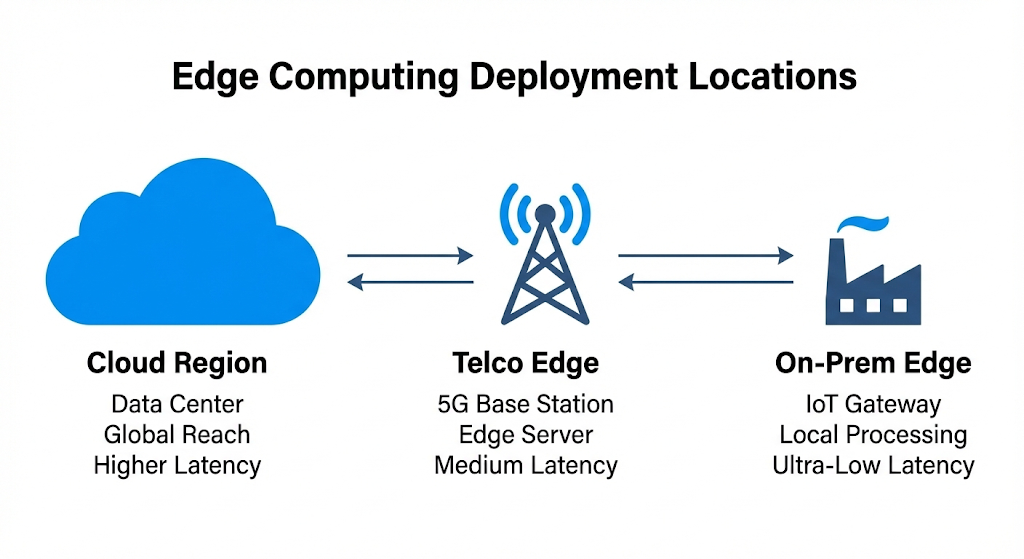
However, edge is not a replacement for the cloud region. It is a layer. Central regions still provide scale, storage, training, and heavy analytics. The winning pattern is a split brain. Edge handles urgent decisions. The region handles deep learning, long-term analysis, and global coordination.
Telco edge and public cloud are converging
Many leaders assume they must build edge alone. That is often false. Public cloud providers partner with telecom operators to place cloud services closer to the radio network. These edge zones can reduce latency and keep traffic local.
Consequently, you can deploy a familiar cloud stack, but in a more local footprint. That feels reassuring. It also reduces friction for teams that already use cloud tooling. CI pipelines, IAM, observability agents, and policy frameworks often carry over.
Still, there is a tradeoff. Telco edge footprints can be limited by geography. Coverage can vary by city. Service availability can differ from one operator to another. Therefore, you need a portability plan. Kubernetes and container standards can be an authentic advantage here, if you use them well.
Private 5G plus private edge changes the enterprise map
In 2025, private 5G is a serious option for controlled sites. Think ports, campuses, mines, airports, and factories. Private networks can provide predictable coverage and strong control. That can feel like a guaranteed upgrade over chaotic Wi-Fi, especially in harsh environments.
Additionally, private edge compute fits naturally with private 5G. Sensitive data stays on-site. Critical video gets processed locally. Operations continue even when the WAN is unstable. This is a vital pattern for safety, compliance, and operational continuity.
Yet, private setups add operational work. Teams must manage SIMs or eSIMs, device onboarding, and security policies. Edge nodes need regular patching. Radio quality needs monitoring. So the honest approach is to scope your first deployment tightly. Choose one site and one workflow. Make it successful before you scale.
Network slicing and network APIs: the cloud gets programmable connectivity
Network slicing changes how apps ask for quality
Network slicing is often described as “many virtual networks on one physical network.” That phrase is catchy, but incomplete. The deeper point is that the network can be shaped for a specific purpose. That purpose could be low latency. It could be high reliability. It could be massive device density.
Furthermore, slicing supports the idea that connectivity can match the needs of a workload. That feels empowering. It helps leaders stop treating the network as a mystery. Instead, you define requirements and measure outcomes.
Still, slicing maturity differs across markets. Some operators are advanced. Others are early. So you should treat slicing as an option, not a dependency. When it works, it is a breakthrough advantage. When it is missing, your app must still function.
Network APIs connect telecom capabilities to cloud apps
A quiet revolution is happening through network APIs. Instead of building custom telco integrations, developers can call standardized APIs for certain network functions. This supports a more unified developer experience. It also encourages safer design patterns.
Additionally, network APIs can support features like device status, number verification, location signals, or quality requests, depending on what is deployed. For cloud teams, this is exciting because it reduces the gap between app logic and network behavior. It makes connectivity feel more like a controllable service.
However, governance is crucial. You need clear access control, logging, and privacy review. A location signal is sensitive. A quality request is operationally critical. Therefore, treat network API access like privileged cloud access. That approach builds trust.
Cloud design shifts: from stateless to situational
Traditional cloud patterns favor stateless services. That is efficient and scalable. Yet, 5G introduces context. Device mobility, radio conditions, and local edge zones create a situational reality. Apps must adapt.
Meanwhile, the best architectures use context without becoming fragile. Great designs keep core services stable. Context handling moves to an edge layer. Event streams synchronize state. Caches stay aggressive. Retries become intelligent.
This is not just technical elegance. It is a profitable outcome. Better user experience reduces friction. Faster decisions reduce waste. Reliable operations reduce downtime anxiety. Those benefits are rewarding, and they compound over time.
The essential choices that make 5G-cloud successful
Decide where latency is truly critical
First, be brutally honest about what needs real time. Many apps feel slow, but only some tasks are latency critical. Checkout scans are time sensitive. Safety stops are urgent. Medical alerts are vital. Video calls are sensitive to jitter. Batch reports are not.
Additionally, this clarity prevents wasted effort. It keeps teams focused. It also makes vendor conversations sharper and more confident. When you can name the critical path, you can measure it. When you can measure it, you can improve it. That is a proven loop.
However, avoid perfectionism. Pick one workflow and one metric. Make a small, reliable improvement. Even a 50 to 100 millisecond gain can feel dramatic to users. That early win is motivating and rewarding.
Choose a portability strategy you can trust
Second, decide how portable your edge layer must be. Edge footprints differ by operator and city. Cloud edge products differ by provider. Private edge stacks differ by integrator. Without portability, you can get stuck.
Furthermore, cloud native standards are a strong safety net. Containers, Kubernetes, and well-designed APIs improve portability. In 2024 survey data from the cloud native ecosystem, multi-cloud usage remains common. That means many teams already run more than one cloud provider. This reality makes portability an essential skill, not a luxury.
Still, portability is not free. It adds complexity. So choose a pragmatic target. Aim for “move in weeks,” not “move in hours.” Keep configs and policies as code. Keep observability consistent. This approach is practical, trusted, and resilient.
Build a verified operating model, not a hopeful demo
Third, treat operations as the core product. Demos can be exciting. Production is demanding. Edge nodes need patching. SIM fleets need lifecycle control. Certificates need rotation. Logs need retention. Incidents need crisp playbooks.
Consequently, the operating model must be verified early. Set SLOs. Agree escalation paths with your telecom partners. Clarify who owns the edge at 2 a.m. These details feel boring, but they are critical. They separate thriving deployments from fragile pilots.
Finally, bake in security. Enable secure boot where possible. Add strong attestation when you can. Encrypt storage by default. Keep keys protected. This disciplined approach creates authentic trust and a calmer leadership experience.
Cloud workloads that benefit first from 5G
Real-time AI at the edge becomes practical
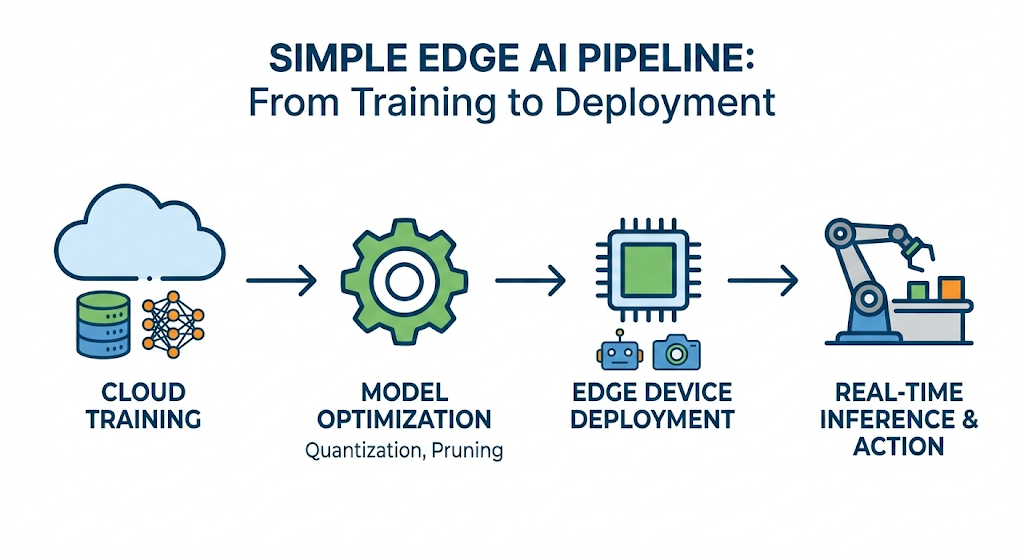
AI inference is often small, fast, and repeated. That makes it a perfect edge workload. With 5G and edge compute, you can run inference close to the camera, the machine, or the worker. That reduces latency and bandwidth use.
Additionally, this enables verified outcomes in safety and quality control. Cameras can detect defects immediately. Wearables can detect dangerous fatigue. Robots can stop faster. These are critical wins, not cosmetic features.
However, edge AI needs disciplined lifecycle management. Models must be versioned. Devices must be updated safely. Drift must be monitored. Therefore, build a simple MLOps pipeline first. Keep the first model small. Make it reliable. Then expand.
Media, gaming, and immersive apps push new cloud patterns
Immersive experiences demand responsiveness. They also demand stable uplink. In 2025, creators stream from phones, cameras, and drones. Teams collaborate through high-fidelity calls. Gamers expect low jitter. XR tools demand crisp motion.
Consequently, 5G can unlock stronger experiences, especially when paired with local edge compute. Encoding can happen closer to capture. Transcoding can be distributed. Scene rendering can be offloaded. This can feel exclusive, because it enables product experiences competitors cannot match.
Still, content workloads can be brutally expensive at scale. So you must be precise. Cache what you can. Compress smartly. Place compute near hotspots. Measure actual gains. That measurement culture is essential for sustainable success.
Industrial IoT and private 5G deliver controlled excellence
Industrial IoT often fails for boring reasons. Wi-Fi drops. Devices roam poorly. Latency spikes. Coverage has dead zones. 5G, especially in private deployments, can address these pain points.
Additionally, private 5G enables secure segmentation for machines, staff devices, and visitor gear. It can support deterministic-like behavior for certain tasks. It can also simplify device fleet management with SIM-based identity.
However, industrial success depends on integration. OT systems are sensitive. Downtime is scary. So start with non-invasive use cases. Predictive maintenance and visual inspection are often safer first steps. Build confidence. Then move toward closed-loop control.
Security, compliance, and resilience in a 5G-cloud world
However, this is the most critical section for many leaders. A secure, verified, trusted posture keeps cloud and edge resilient. Strong controls feel reassuring. Proven habits reduce risk and protect confidence.
The attack surface grows, so trust must be intentional
5G expands connectivity to more devices and more places. That is powerful, but it is also risky. Each connected sensor, camera, and gateway can be a target. Each edge node can be a new entry point.
Furthermore, cloud services are now closer to users. That can be a security advantage, because you can localize traffic and enforce policy at the edge. Yet, it can also be a weakness if edge nodes are poorly managed. Therefore, patching and hardening are vital.
Strong identity is the anchor. Adopt device identity. Prefer workload identity. Rotate short-lived tokens. Log everything important. This is not optional. It is critical for authentic trust.
Zero Trust patterns fit 5G and edge better than old perimeters
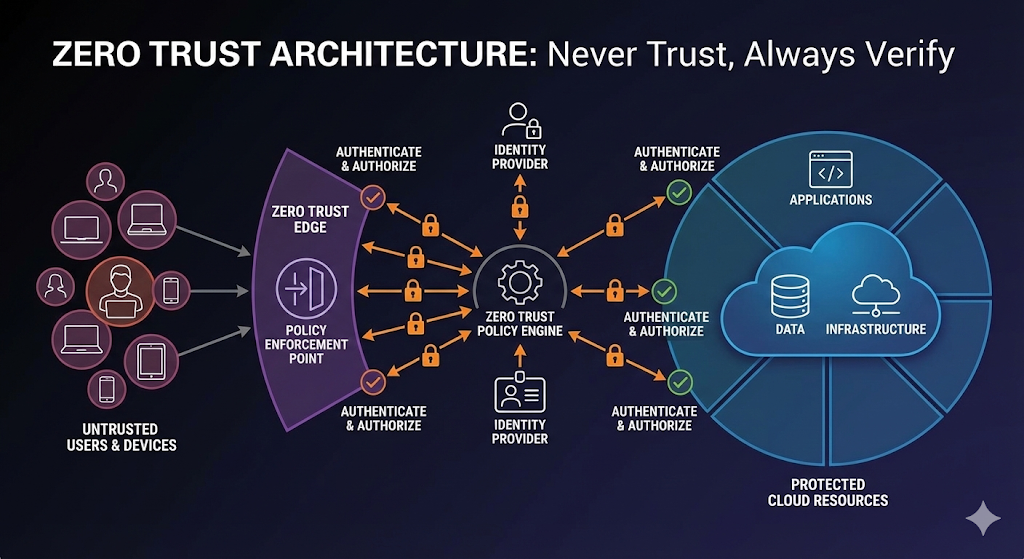
Perimeter thinking fails when devices roam. Perimeter thinking fails when apps span regions and edges. Trust breaks when you rely on partners and contractors. That is why Zero Trust approaches are so attractive. They focus on continuous verification.
Additionally, Zero Trust fits modern cloud tooling. Policies can be defined as code. Teams can enforce least privilege. Network paths can be segmented. Anomaly signals can be detected early. This is a certified approach in many security programs, and it is widely adopted.
Still, Zero Trust is not a product you buy. It is an operating mindset. Governance must be explicit. Training must be continuous. Measurement must be routine. So choose a small scope. Protect one workflow end-to-end. Then expand with confidence.
Data residency and sovereignty become front-page concerns
As of late 2025, more leaders care about where data lives. Certain industries demand strict residency. Many governments demand local processing for sensitive data. Customers often demand stronger privacy controls.
Consequently, 5G plus edge can support residency by keeping data close. Local processing can send only summaries to the central cloud. Sensitive logs can stay in a local zone. Region-locked policies can be applied.
However, you must be transparent. Document what stays local. Document what leaves. Provide audit trails. Verify encryption. Also, align contracts with reality. This is the kind of discipline that builds durable trust and avoids painful surprises.
A practical 90-day plan to act with confidence
Week 1 to 3: pick one latency critical workflow
First, choose a workflow that is clearly painful today. The workflow should have a measurable latency or reliability problem. A clear business owner must sponsor it. Real users must depend on it.
Additionally, write down the target metrics. Choose simple ones. End-to-end response time. Error rate. Task completion time. Also note the cost drivers. Bandwidth use. Compute use. Device count.
Then, map the data path. List what runs in the cloud region today. Mark what could move to the edge. Confirm what must stay central. This clarity is essential, because it prevents chaotic scope creep.
Week 4 to 7: build a small edge slice of your architecture
Next, implement an edge component with strict boundaries. Keep it simple. Start with one API. Pair it with a single model. Keep a lean cache. Use a proven runtime. Containers are a strong default.
Furthermore, design for failure. Add offline behavior. Include retries. Create a safe fallback. Make your system resilient, even when the network is imperfect. This step is vital for trust.
Also, set up observability from day one. Logs, metrics, traces, and device telemetry must flow into a central view. If you cannot see it, you cannot improve it. Visibility is a powerful confidence booster for leaders and engineers alike.
Week 8 to 12: expand governance, then scale carefully
Finally, review security and compliance with real evidence. Present logs. Review access policy. Verify encryption settings. Share data flow diagrams. This is where trust becomes verified, not assumed.
Additionally, run performance tests in real conditions. Test at peak hours. Stress weak coverage areas. Validate failover. If results are strong, scale to a second site or a second workflow. If results are weak, refine and retest.
By day 90, you should have a working pattern. You should have real metrics. You should have a confident team. From there, scaling becomes a controlled process. That is a rewarding place to be in 2025.
Critical questions to ask partners before scaling
Additionally, your next meetings should feel sharp and confident. Ask for verified answers, not vague promises. Request simple evidence. Demand clarity.
First, ask where the edge zones exist today, city by city. Then ask what is planned in 2026. Next, ask how routing works when users move. Also ask what happens during congestion. These are critical details.
Furthermore, ask about security in plain terms. Who patches the edge hardware? Who rotates certificates? Which logs are retained, and for how long? What is the incident response path? A reliable partner can answer quickly.
Also, ask about compliance and data residency. Can sensitive data stay local? Can encryption keys be customer-managed? Are audits supported? These questions protect trust.
Finally, ask about portability. Will workloads move between zones without rewrites? Do the same containers run elsewhere? Does observability stay consistent? A proven plan here reduces risk and supports successful growth. This is a vital step toward a resilient, thriving deployment.
Conclusion
5G is reshaping cloud services by pushing compute closer to users and devices. It enables faster decisions, stronger experiences, and more resilient operations when paired with edge computing. It also forces a more serious approach to security, governance, and portability.
Consequently, the best strategy is both bold and disciplined. Be bold about testing edge and real-time workloads. Be disciplined about measurement, identity, and failure design. That combination is powerful, and it is achievable.
If you treat 5G as an infrastructure upgrade only, you miss the breakthrough. If you treat it as a magic wand, you invite disappointment. Instead, treat it as a strategic platform. Build a small win. Make it reliable. Then scale with confidence.
Finally, keep the mindset critical and disciplined. Rely on proven, verified steps. Stay secure and trusted in every layer. Aim for successful, thriving outcomes that feel rewarding.
Sources and References
- Ericsson Mobility Report: 5G and FWA poised for strong growth (June 2025) (ericsson.com)
- ITU Facts and Figures 2025 (ITU)
- 3GPP Release 18 (AWS Documentation)
- ETSI MEC architecture specification (GS MEC 003, May 2025) (ETSI)
- CNCF Annual Survey 2024 (CNCF)
- AWS Wavelength (Amazon Web Services, Inc.)
- NIST SP 800-207: Zero Trust Architecture (NIST Computer Security Resource Center)
- CAMARA Project resources (LF Networking)
- GSMA Intelligence: 5G in Africa 2025 (gsmaintelligence.com)