
Discover breakthrough technologies for 2026 and beyond, from agentic AI to quantum-safe security, with 2024-2025 signals you can use now.
In December 2025, the future feels thrilling and unforgiving at the same time. The pace is not slowing. Customers expect instant service. Regulators expect provable safety. Competitors expect you to stumble.
So, which emerging technologies genuinely deserve attention right now? The answer is not “everything AI.” The real winners combine breakthrough capability with practical deployment, verified trust, and energy-smart scaling.
The roadmap for what matters next
How to read this guide
This guide focuses on technologies that can reshape products, operations, and security within the next three to five years. It keeps an analyst mindset. It also stays grounded in what enterprises can actually buy, build, and govern.
What “emerging” means in late 2025
A technology is emerging when it is moving from pilots to repeatable rollouts. Additionally, it must show clear standards, serious vendors, and growing talent. Hype alone is not a signal. Durable adoption is the signal.
Agentic AI and multi-agent systems
Why agentic AI feels revolutionary
Generative AI can write and summarize. Agentic AI can plan, decide, and act across tools. That shift is dramatic. It turns AI from a helpful feature into a powerful digital coworker. However, it also raises critical questions about control, safety, and accountability.
Recent coverage highlights both the promise and the risk. For example, Gartner estimates that many agentic AI initiatives may be canceled if value is unclear, even while adoption expectations rise. (Reuters)
What changes inside a company
First, workflows become goal-based. A user asks for an outcome, not a button-click sequence. Next, the system chooses tools, calls APIs, and requests approvals. Meanwhile, teams start designing “guardrails” as carefully as features.
The most rewarding early wins are specific and measurable. Think: vendor onboarding, policy checks, incident triage, or procurement comparisons. Consequently, the best agentic programs start with narrow scope, strict permissions, and verified audit trails.
The hard truth you must plan for
Agentic systems can fail in surprising ways. They may overreach. They may loop. They may do the wrong thing very confidently. Therefore, the most essential design choice is not the model. It is the control plane.
A strong control plane includes identity, approvals, logging, and rollback. It also includes clear ownership when the agent acts. That governance is not boring. It is vital.
On-device AI and edge intelligence
Why “small models” are suddenly a big deal
Cloud AI is impressive. On-device AI is liberating. It cuts latency. It reduces bandwidth. It keeps sensitive data closer to the user. Additionally, it unlocks offline and low-connectivity use cases that feel almost magical.
This trend shows up everywhere: phones, laptops, cameras, kiosks, industrial sensors, and vehicles. The keyword to watch is “efficient inference.” Another keyword is “hybrid AI,” where the device handles routine tasks and the cloud handles heavy reasoning.
Where it creates a strong advantage
Customer experiences become more responsive. Voice, vision, and personalization can feel instant. Meanwhile, factories gain safer automation, because critical decisions do not depend on a remote link.
Edge AI also supports privacy goals. Data can be processed locally, then shared as summaries. That approach is both comforting and strategic.
Buying guide in one paragraph
Choose hardware with strong NPUs or accelerators. Prefer toolchains that export models cleanly. Demand monitoring that detects drift. Finally, require a secure update path, because edge fleets can become a silent liability.
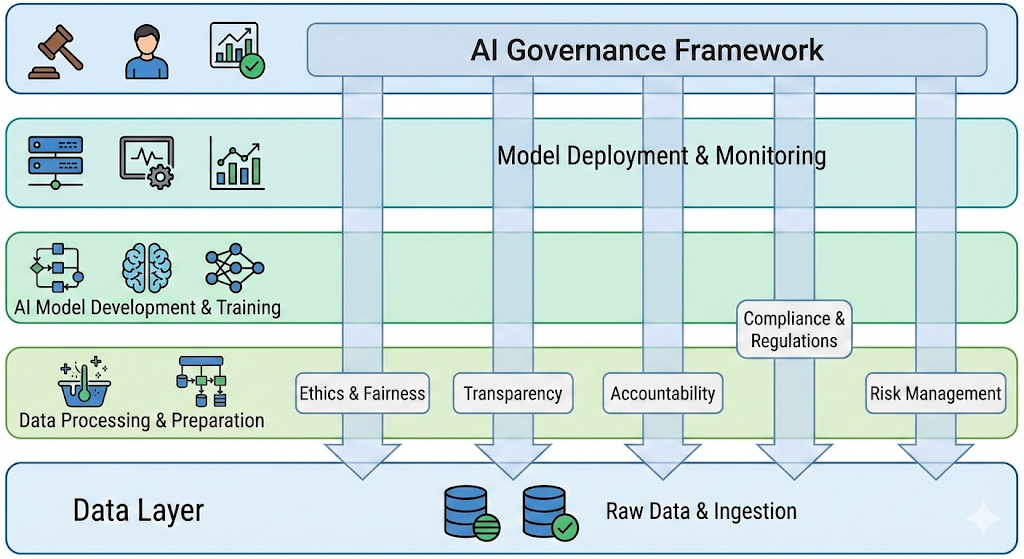
AI trust, digital provenance, and governance layers
The urgent problem: synthetic content at scale
Deepfakes are improving. Automated content generation is exploding. That reality is exciting and frightening. Consequently, trust becomes a competitive weapon.
Digital provenance aims to answer a simple question: “Where did this come from?” It includes watermarking, content credentials, and tamper-evident metadata. Additionally, it supports brand protection, safer media workflows, and safer elections.
Governance is moving from optional to essential
In the EU, the AI Act sets a phased timeline with specific obligations. Some requirements already apply, and more apply through 2026 and beyond. (Digital Strategy)
That matters even if you are not based in Europe. Partners will ask for compliance evidence. Customers will demand transparency. Meanwhile, boards will demand that risk is measurable, not emotional.
What “good” looks like in practice
Good governance is not a giant PDF nobody reads. It is living controls. It includes model inventories, risk tiers, testing, red-teaming, and incident playbooks. Furthermore, it includes a “human-in-the-loop” policy that is honest about when humans must approve actions.
Avoid vendors promising guaranteed miracles. Instead, prefer systems with verified logs, clear policy enforcement, and simple explanations. That approach is calmer and far more reliable.
Post-quantum cryptography and quantum readiness
The breakthrough and the threat
Quantum computing progress is uneven. Still, the risk to today’s public-key cryptography is taken seriously. “Harvest now, decrypt later” is the scary scenario. Attackers can collect encrypted traffic today and wait for future capability.
In August 2024, NIST released finalized post-quantum cryptography standards, a major milestone for practical migration planning. (NIST)
What a smart migration looks like
Start with discovery. Identify where you use RSA and ECC. Next, map certificates, key exchanges, and signature flows. Then, prioritize systems with long-lived confidentiality, such as health data, national IDs, and critical infrastructure.
Hybrid approaches are common. They combine classical and post-quantum methods during transition. Additionally, vendors are beginning to ship post-quantum options in managed services. For example, AWS describes its post-quantum cryptography approach and deployments aligned to NIST-standardized algorithms. (Amazon Web Services, Inc.)
Why this is a board-level topic
Crypto migration is tedious. Yet it is vital. It touches every system, every partner, and every contract. Consequently, the strongest organizations treat quantum readiness as a multi-year program, not a weekend upgrade.
Confidential computing and privacy-enhancing technologies
Why “trust the cloud” is evolving
Zero trust changed how we secure identities and networks. Confidential computing changes how we secure data while it is being processed. That is a powerful shift.
Confidential computing uses trusted execution environments to isolate sensitive workloads. It reduces insider risk. It also reduces the blast radius of a breach. Meanwhile, it supports regulated industries that need provable separation.
Privacy tech that feels like a breakthrough
Privacy-enhancing technologies include federated learning, secure multi-party computation, and differential privacy. These tools can let organizations collaborate without exposing raw data. That is both thrilling and practical.
The best use cases are clear. Think: fraud patterns across institutions, shared threat intelligence, and joint health research. Additionally, these approaches can reduce compliance friction without sacrificing insight.
How to avoid a painful rollout
Keep the first deployment small. Choose workloads with clear confidentiality value. Require performance benchmarks. Finally, train teams early, because the mental model is different from classic encryption.
Robotics and physical AI
Why robots are entering a new era
Software agents act in digital space. Robots act in physical space. That jump is dramatic. It is also risky.
Robotics is improving through better perception, cheaper sensors, stronger simulation, and smarter planning. Humanoid and warehouse robots are getting more capable. Meanwhile, specialized field robots are expanding in agriculture, mining, and security.
Where the most profitable impact appears
Logistics is a prime target. Warehouses crave speed, safety, and consistency. Manufacturing also benefits, especially for repetitive tasks and inspection. Additionally, service robots are maturing in retail and hospitality.
The most successful deployments focus on reliability first. A slightly slower robot that never breaks rules is more rewarding than a fast robot that causes chaos.
Safety, liability, and trust
Physical systems can hurt people. Therefore, safety engineering is essential. Clear geofencing, emergency stops, and certified procedures matter. Also, you must plan for maintenance, because downtime destroys confidence.

Spatial computing and digital twins
The next interface shift
Spatial computing blends the digital and physical worlds. Headsets are one part. Digital twins are the deeper part. A digital twin is a living model of a building, factory, supply chain, or machine.
This tech becomes valuable when it is connected to real data. Sensors feed it. Maintenance updates it. Additionally, simulations test changes before money is spent.
High-impact enterprise use cases
Training becomes safer. Remote assistance becomes faster. Design reviews become clearer. Meanwhile, operations teams can simulate failures and plan responses.
In regulated environments, digital twins support verified reporting. They also support energy optimization. That is essential as electricity constraints tighten.
Practical rollout tips
Start with one asset. Choose a system with expensive downtime. Use common data standards. Then, expand carefully. Otherwise, you create a beautiful model nobody trusts.
Next-gen connectivity: private 5G, satellite links, early 6G signals
Connectivity is becoming strategic again
Cloud adoption made bandwidth feel limitless. AI workloads are changing that. Edge computing adds more nodes. Consequently, connectivity becomes a competitive constraint.
Private 5G and 5G-Advanced improve reliability and control for enterprises. Non-terrestrial networks add resilience in remote regions. Meanwhile, early 6G research is shaping what comes next, especially for sensing, ultra-low latency, and integrated AI management.
What enterprises actually buy
They buy coverage and uptime. They buy predictable latency. They buy secure device onboarding. Additionally, they buy visibility, because blind networks are terrifying.
Security must be designed in
More connectivity creates more attack surface. Therefore, identity and segmentation are vital. Prefer modern authentication, strong device management, and continuous monitoring. Also, plan for supply-chain risk in network equipment.
Sustainable computing and energy-aware infrastructure
The uncomfortable reality: AI needs power
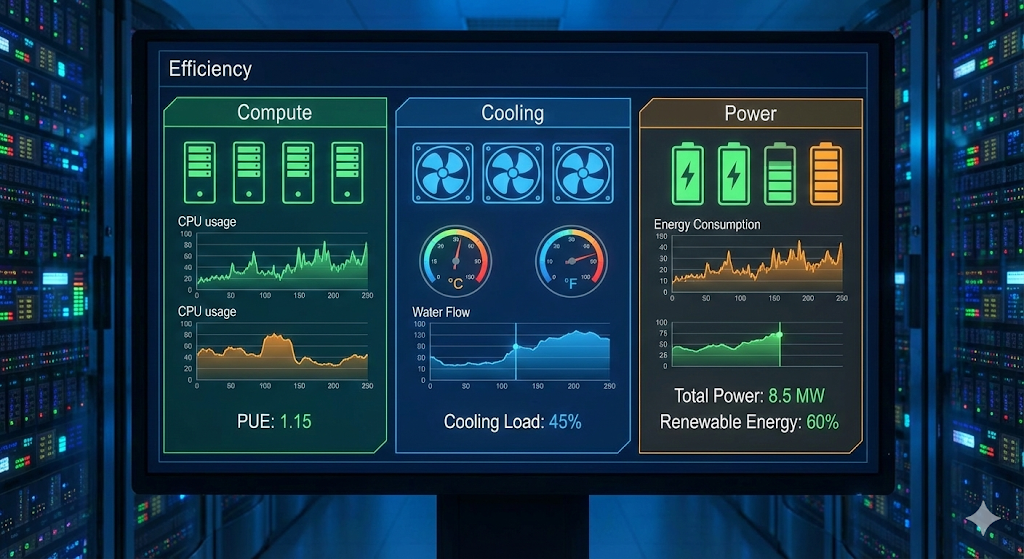
The AI boom is exciting. It is also energy-hungry. Data centres already consume a meaningful share of global electricity. The International Energy Agency estimates data centre electricity use at around 415 TWh in 2024, about 1.5% of global electricity consumption. (IEA)
Additionally, the IEA projects major growth in electricity needed to supply data centres through 2030 and beyond under baseline scenarios. (IEA)
Why this reshapes technology strategy
Energy becomes a constraint like talent. It changes where data centres are built. It changes chip design. It changes cooling and facility choices. Meanwhile, it changes procurement, because energy contracts can become a hidden risk.
This is not abstract. For example, late-2025 reporting highlights rising power demand linked to data centres and AI. (Reuters)
What to do now
Track performance per watt. Prefer efficient architectures. Use workload scheduling to avoid peaks. Furthermore, invest in observability that links compute to energy cost. This is both critical and empowering.
Bioengineering and synthetic biology meets AI
Why biology is entering a breakthrough phase
AI is speeding up discovery. Biology is becoming more programmable. Together, they create a thrilling frontier.
We see progress in protein design, lab automation, and faster experimentation loops. Additionally, cheaper sequencing and better models are expanding what smaller teams can do.
High-value use cases in the next wave
Drug discovery can get faster. Diagnostics can get more accurate. Agriculture can become more resilient. Meanwhile, materials inspired by biology can become more sustainable.
However, risks are real. Biosecurity and ethics are essential. Governance must be authentic, not performative. The most trusted organizations will be those that treat safety as a core product feature.
How to engage without losing control
Build partnerships with credible labs. Set strict access controls. Require verified review processes for sensitive work. Finally, create a clear policy for dual-use concerns, so teams are not improvising under pressure.
Advanced materials, manufacturing, and next-gen chips
The chip story is bigger than “faster GPUs”
Compute demand is exploding. At the same time, supply chains are fragile. Consequently, advanced packaging, chiplets, and specialized accelerators are becoming strategic.
These approaches can reduce cost and improve performance. They also allow more flexible designs. Additionally, they support edge devices that need power efficiency, not raw speed.
Manufacturing is becoming more digital
Additive manufacturing is improving. Simulation is becoming more realistic. Quality control is becoming more automated through vision AI. Meanwhile, factories are adopting more sensors and “closed loop” processes.
The result can be a rewarding jump in uptime and yield. Yet it requires disciplined data governance. Otherwise, the digital layer becomes noise.
Energy storage and electrification
Battery innovation continues. Grid storage is becoming more important. Solid-state research is promising, but timelines vary. Therefore, leaders treat this area as a portfolio bet, with both near-term and longer-term options.
A decision framework for choosing the right bets
Use 2024 to 2025 signals, not vibes
Reports from major research groups highlight common themes: AI everywhere, digital trust, advanced connectivity, and sustainability. For example, the World Economic Forum’s Top 10 Emerging Technologies 2024 report tracks key breakthroughs across AI, materials, and sustainability. (World Economic Forum)
Similarly, Gartner’s strategic trends coverage emphasizes multiagent systems, AI security, confidential computing, and digital provenance as major themes. (Gartner)
McKinsey’s technology trends work also points to strong momentum across cloud and edge computing, connectivity, and AI-related capabilities. (McKinsey & Company)
Make your portfolio brave but disciplined
Pick one or two “platform bets,” such as agentic AI or digital twins. Then pick a few “risk shields,” such as post-quantum readiness and provenance. Additionally, include “efficiency bets,” such as energy-aware infrastructure.
Avoid betting everything on a single vendor. Prefer open interfaces. Demand export paths for data and models. Furthermore, negotiate clear security obligations, because trust is now a hard requirement.
The simplest execution plan
Start with one flagship use case per technology. Measure outcomes monthly. Expand only after controls are stable. Finally, invest in talent and change management, because culture decides speed.
Conclusion
The future is not a prediction. It is a build. In December 2025, the most successful organizations are not the loudest. They are the ones that move with confident discipline.
Choose technologies that deliver real breakthroughs, not empty hype. Build trust layers that feel verified and calm. Then scale with energy awareness, because power is becoming a critical constraint.
If you do that, the next few years can feel not just disruptive, but genuinely rewarding.
Sources and References
- World Economic Forum: Top 10 Emerging Technologies of 2024
- Gartner: Top Strategic Technology Trends for 2026
- NIST: First Finalized Post-Quantum Encryption Standards (Aug 13, 2024)
- NIST CSRC: PQC FIPS Approved (FIPS 203, 204, 205)
- European Commission: AI Act timeline and applicability
- IEA: Energy and AI, energy demand from AI
- IEA: Energy and AI, energy supply for AI
- McKinsey: The top trends in tech 2024
- Reuters: Over 40% of agentic AI projects may be scrapped by 2027
- AWS: Post-Quantum Cryptography overview
- YouTube: Andrew Ng on AI agents and agentic reasoning (BUILD 2024)
- YouTube: AWS re:Inforce 2025, Post-quantum cryptography demystified