Unlock secure, powerful IoT + AI wins in 2025. Learn edge AI, data strategy, governance, and real use cases to move fast with confidence.
Additionally, why IoT plus AI feels urgent in December 2025
In December 2025, most businesses are not asking if connected devices matter. They are asking why their connected data still does not change outcomes. That gap is where AI becomes essential. IoT creates constant signals. AI turns those signals into decisions you can trust.
This integration is not a trendy experiment. It is a critical shift in how modern operations run. It is also a proven path to more resilient uptime, safer work, and faster response. When it works well, it feels like a breakthrough. When it fails, it feels expensive, noisy, and frustrating.
So what should a serious business know before it commits?
First, define the real promise in one sentence
IoT plus AI is a decision loop.
Sensors observe the real world. Networks move the signals. Software organizes the streams. Models predict or detect. People or machines act. The system learns again.
That loop is powerful because it reduces guesswork. It is rewarding because it scales. It is also risky if you ignore data quality, security, and accountability.
Next, understand why the timing is different now
Several forces have collided.
Connectivity is everywhere. Edge hardware is stronger. Cloud platforms are mature. Meanwhile, AI tooling is far more accessible. Even teams without deep research backgrounds can deploy credible models.
Just as important, leaders now expect measurable outcomes. They want verified improvements in downtime, safety, quality, and service. They want clear ownership. They want responsible use.
However, what “integration” actually means in practice
A lot of projects fail because “integrate IoT and AI” sounds vague. So here is a clear way to think about it.
Integration layer 1: Reliable data capture
This is the physical truth layer.
Sensors must be placed correctly. They must be calibrated. Their timestamps must be consistent. Their sampling rates must fit the problem. If the sensor lies, the model learns lies.
This layer is not glamorous. Yet it is vital. It is the foundation that makes every later step credible.
Integration layer 2: A data pipeline you can audit
You need to know where data came from, where it went, and what changed.
You also need to separate raw signals from curated features. Otherwise, teams will keep rebuilding the same transformations. That wastes time and creates silent errors.
Auditability is not bureaucracy. It is what makes AI trustworthy when someone asks, “Why did the system do that?”
Integration layer 3: A decision engine that fits the business
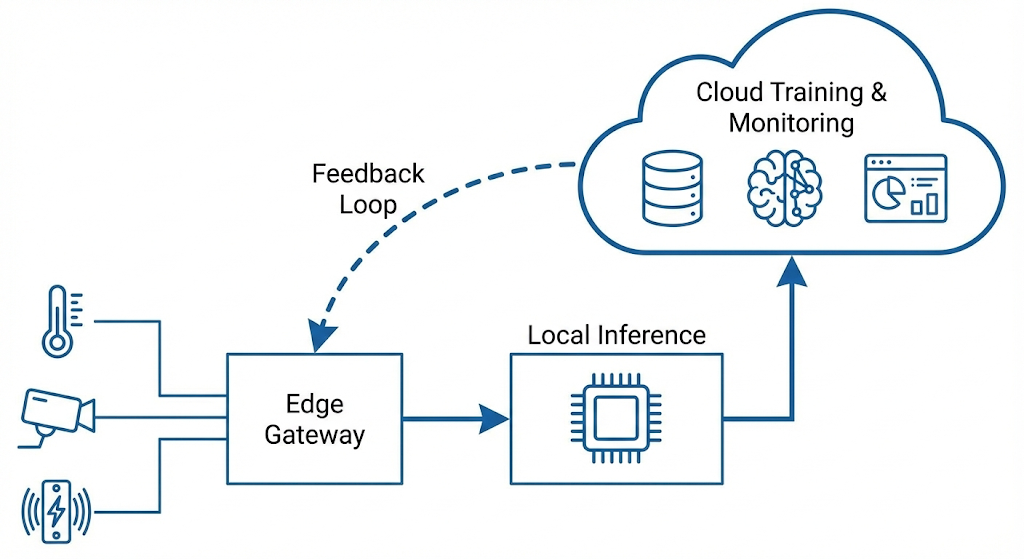
Some decisions should run in the cloud. Others must run at the edge, close to machines and people.
If a safety event needs action in milliseconds, cloud-only inference is a weak choice. If you need heavy training, edge-only is unrealistic.
The winning pattern is usually hybrid. It is practical. It is scalable. It is also easier to govern.
Integration layer 4: The operating model that keeps it alive
Even a brilliant pilot dies without ownership.
Who patches devices? Who approves model updates? Who watches drift? Who handles incidents at 2 a.m.?
A thriving IoT plus AI system is not just tech. It is a living product with clear roles and disciplined routines.
Meanwhile, the most profitable outcomes come from a short list of use cases
You do not need dozens of use cases. You need a few high-impact loops that teams will protect and improve.
Predictive maintenance that reduces surprise downtime
Predictive maintenance is still one of the most reliable wins. It works because machines leave early warning signals. Vibration shifts. Temperature rises. Power draw changes. Noise patterns drift.
The emotional value here is confidence. Teams stop fearing sudden breakdowns. They plan. They schedule. They reduce chaos.
However, predictive maintenance is not magic. You need failure history. You need labels. You need a clear definition of “failure” and “acceptable risk.” Without that, you get endless alerts and zero trust.
Quality inspection that catches defects early
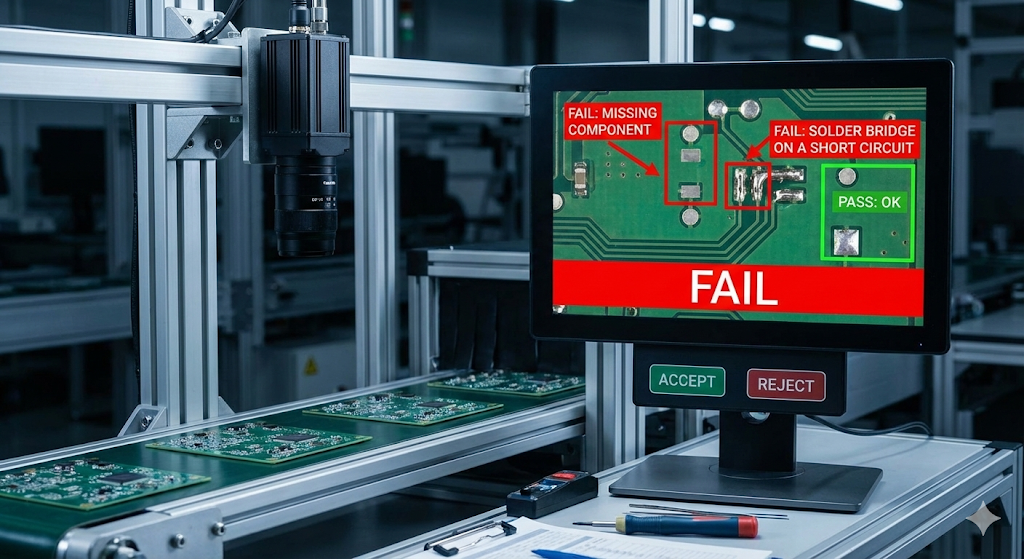
Computer vision at the edge can spot defects that humans miss, especially when fatigue sets in. It can also spot problems earlier, when the cost of fixing is lower.
This is a powerful use case for manufacturing, food processing, electronics, and packaging. It can be transformative when quality is your brand.
Still, lighting, camera placement, and product variability can ruin accuracy. So you must engineer the environment, not just the model.
Energy optimization that delivers immediate operational relief
Smart energy systems can forecast demand, spot waste, and optimize control settings.
This matters in factories, buildings, data centers, and logistics hubs. In many cases, it is a fast win because the data already exists.
Additionally, it improves sustainability reporting. That is not just PR. It is increasingly tied to customer requirements and procurement decisions.
Supply chain visibility with real-time risk signals
IoT tracking with AI can predict delays, reduce spoilage, and improve warehouse flow.
It can fuse location, temperature, humidity, shock events, and traffic signals. It can warn teams early. That warning is valuable because it creates options.
Nevertheless, supply chain data is messy. Different partners use different systems. So interoperability becomes critical.
Connected safety systems that prevent serious incidents
Wearables, cameras, and environment sensors can detect unsafe conditions. AI can spot patterns before they become accidents.
This is one of the most emotionally urgent benefits. Safety is vital. It is also measurable.
However, it must be handled responsibly. Privacy rules matter. Consent and transparency matter. Trust matters.
Consequently, architecture choices decide whether you scale or stall
Many teams rush into tools. They pick a platform first. Then they try to force the business into it. That is backwards.
A better approach is to choose architecture based on decision speed, risk, and data gravity.
Edge AI: when latency, privacy, or resilience is critical
Edge AI means running inference close to where data is produced.
It is essential when the network is unreliable. It is also essential when latency matters. In factories, mines, farms, and remote sites, local decisions are often the only safe option.
Edge AI also helps with privacy. You can process sensitive video locally, then send only metadata. That is a powerful pattern.
Cloud AI: when you need heavy training and cross-site learning
Cloud remains the best place for training, experimentation, and fleet-level analytics.
Cloud also helps when you need data from many sites. It supports better models, better dashboards, and stronger governance.
Still, cloud-only inference can be fragile. If connectivity drops, your “smart” system becomes blind. That is a painful failure mode.
Hybrid: the practical, proven default
In most real businesses, hybrid wins.
Inference runs at the edge for speed and resilience. The cloud handles training, monitoring, and orchestration. Data is filtered and compressed before it leaves the site.
This pattern is not glamorous. It is simply reliable.
Digital twins: when you need context, not just data
A digital twin is not a 3D model for marketing. A serious twin is a structured representation of assets, relationships, and state.
When you combine IoT telemetry with a twin, you gain context. AI can reason about the system, not just signals.
This is especially valuable for plants, fleets, smart buildings, and complex infrastructure.
“Composite AI” and “agentic AI” at the edge
In 2025, many deployments combine predictive models with generative interfaces. Some teams are also testing agent-like behavior, where the system can propose actions.
This can feel revolutionary. It can also be dangerous if you do not control permissions.
The safe path is clear boundaries. Let the system recommend. Let humans approve. Then expand autonomy only when trust is earned.
Furthermore, data strategy is the unglamorous work that decides success
IoT plus AI fails more often from data problems than model problems.
Sensor design and calibration are business decisions
Sensor placement is not an engineering detail. It shapes what you can predict. It defines what you can prove.
Good teams treat sensor plans like product design. They test. They measure. They iterate. That discipline is proven and rewarding.
Data quality needs visible ownership
You need someone accountable for data quality.
If nobody owns it, every team will blame another team. Then the system slowly rots.
Track missing data. Track outliers. Track timestamp drift. Track sensor downtime. This is boring work, yet it is critical.
Labeling and ground truth must be realistic
Many leaders underestimate labeling.
For predictive maintenance, labels may come from work orders, technician notes, or failure reports. Those sources are messy. They also carry bias.
You need a pragmatic labeling plan. You need rules that teams can follow. You need a feedback loop that improves labels over time.
Feature reuse is a quiet superpower
When you reuse features, you move faster. You also avoid repeated mistakes.
A shared feature layer, with simple governance, is a strong choice. It creates consistency. It also builds trust.
However, security and trust are non-negotiable in IoT plus AI
IoT expands your attack surface. AI expands the ways decisions can go wrong. Together, they demand serious discipline.
Device identity and lifecycle security
A secure fleet starts with identity.
Each device needs a unique identity. It needs strong authentication. It needs secure update paths. It needs an end-of-life plan.
If you cannot patch devices safely, you will eventually face an incident. That is not fear. It is reality.
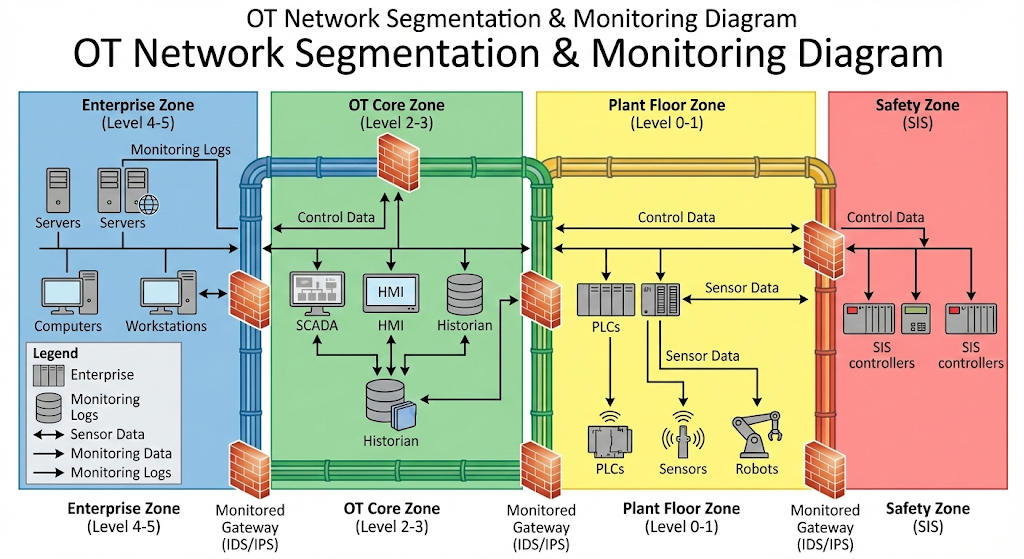
Network segmentation and “zones and conduits” thinking
Industrial environments are not like office networks.
You must segment. You must isolate critical systems. You must design paths that are deliberate and monitored.
This is not optional in serious OT settings. It is essential.
Model security and decision integrity
AI systems can be attacked. Inputs can be manipulated. Models can be stolen. Outputs can be exploited.
So treat models like critical assets.
Control who can deploy a model. Log every version. Test for drift. Watch for abnormal inputs. Build a rollback plan.
Additionally, define how humans override decisions. A trusted system always has a safe stop.
Privacy, compliance, and responsible AI
In December 2025, regulation is more real than many teams admit.
If you operate across regions, you must track AI rules, privacy rules, and sector rules. You also need transparency for employees and customers.
Responsible AI is not just ethics talk. It is risk control. It is trust building. It is business survival.
Meanwhile, interoperability standards save you from painful lock-in
Many businesses end up with a “tower of platforms” that do not talk to each other. That creates fragile systems and stalled value.
Messaging and data exchange basics
Lightweight messaging matters for IoT.
MQTT remains a popular choice for device messaging, especially in constrained settings. In industrial systems, OPC UA plays a central role in interoperability and information modeling.
When you choose standards early, integration becomes calmer. It becomes less emotional. It becomes more predictable.
Unified Namespace and event-driven design
In modern industrial data architecture, teams often aim for a unified view of operational events. That helps analytics, AI, and operations share the same truth.
An event-driven approach also makes change easier. You can add new consumers without breaking producers. That is a strong long-term advantage.
Avoid the “data lake of noise” trap
If you ingest everything with no structure, you create a swamp.
Filter at the edge. Add context. Standardize names. Store raw data for audit, but expose curated streams for products.
This approach is disciplined. It is proven. It also makes AI training faster.
Consequently, choose vendors and platforms with a clear scoring logic
Platform choice can feel emotional. Avoid that.
A practical scoring logic focuses on fit, security, and operational reality.
The platform must support fleet operations, not just demos
Ask hard questions.
Can you manage millions of devices? Can you roll out updates safely? Can you monitor health? Can you handle offline periods?
A demo that ignores these questions is not trustworthy.
Your AI layer must support monitoring and governance
Model monitoring is essential.
You need drift detection. You need version control. You need audit logs. You need role-based access.
If your platform cannot do these, you will build them later under stress.
Cost and complexity must match your maturity
Be honest about maturity.
If your team is small, a simpler managed platform may be the best choice. That is not weakness. It is strategic.
If you have a strong engineering team, more control may be rewarding. It can also be dangerous if governance is weak.
Additionally, an implementation playbook keeps pilots from dying
Most failures happen after the pilot. The pilot works. Then scaling breaks.
So plan for scaling from day one.
Days 0 to 30: define the decision loop and pick one problem
Choose one loop with clear value.
Define the decision. Define the trigger. Define the action. Define who owns outcomes.
Keep scope tight. That is how you build a quick, credible win.
Days 30 to 90: build a production-grade pilot, not a science project
A strong pilot includes security, monitoring, and logging.
It also includes human workflows. Who gets alerts? What do they do next? How do they confirm results?
If you skip these, trust will collapse later.
Months 3 to 6: scale the pattern and standardize
Scaling means standardization.
Create reusable edge deployment patterns. Create reusable data models. Create reusable dashboards.
This is where organizations become thriving. They stop reinventing. They start compounding.
Months 6 to 12: optimize and build continuous improvement
Once scaled, you can optimize.
Tune models. Improve labeling. Reduce false alerts. Add automation where safe. Expand to the next use case.
This stage is rewarding because value becomes consistent.
However, KPIs must prove value without hiding risk
Executives want impact. Operators want safety. Engineers want accuracy. You can satisfy all of them if you measure the right things.
Operational KPIs: what the business feels
Track outcomes like:
Mean time between failures. Mean time to repair. Scrap rate. Energy intensity. Safety incidents. On-time delivery.
These metrics are emotionally meaningful. They reflect real life.
Model KPIs: what the system predicts
Track precision, recall, and false alert rate. Track detection delay. Track confidence calibration.
Most importantly, track how often humans accept recommendations. That is a practical measure of trust.
Governance KPIs: what keeps it safe
Track patch compliance. Track device health. Track model version coverage. Track audit completeness.
A secure system is not just built once. It is maintained with discipline.
Finally, a December 2025 snapshot of the real momentum
This snapshot is here to ground urgency in concrete signals.
Market scale and adoption signals
IoT Analytics reported 18.5 billion connected IoT devices in 2024, with a forecast of about 21.1 billion by the end of 2025. (IoT Analytics)
McKinsey’s Global Survey reported that 65% of respondents said their organizations were regularly using generative AI in early 2024. (McKinsey & Company)
Regulation and responsibility timelines that businesses cannot ignore
The European Commission noted that the EU AI Act entered into force on August 1, 2024. (European Commission)
The EU’s digital strategy page outlines phased application dates, including prohibited AI practices and AI literacy obligations applying from February 2, 2025, and general-purpose AI obligations applying from August 2, 2025, with full applicability generally in 2026 and certain embedded-system timelines extending further. (Digital Strategy EU)
Security baselines and industrial guidance that shape “best practice”
NISTIR 8259A defines a core cybersecurity capability baseline for IoT devices that organizations can use when manufacturing, integrating, or acquiring IoT devices. (NIST Computer Security Resource Center)
ISA describes the ISA/IEC 62443 series as a set of standards for implementing and maintaining electronically secure industrial automation and control systems. (isa.org)
Interoperability standards that reduce integration pain
The OPC Foundation describes OPC UA as infrastructure for interoperability across enterprise layers. (OPC Foundation)
MQTT.org notes MQTT is an OASIS standard, with specifications maintained by the OASIS MQTT Technical Committee. (MQTT)
Conclusion
Integrating IoT and AI is no longer an optional experiment in December 2025. It is an essential capability for resilient operations.
The winning approach is not complicated, but it is disciplined. Start with one decision loop. Build a hybrid architecture that fits reality. Treat data quality as vital. Treat security as non-negotiable. Then scale patterns, not prototypes.
If you do that, IoT plus AI stops being hype. It becomes a trusted engine for faster, safer, more confident work.
Sources and References
- Number of connected IoT devices growing to 21.1B (IoT Analytics)
- The State of AI in early 2024 (McKinsey)
- The State of AI: Global Survey 2025 (McKinsey)
- AI Act enters into force (European Commission)
- AI Act regulatory framework and timeline (EU Digital Strategy)
- IoT Device Cybersecurity Capability Core Baseline NISTIR 8259A (NIST)
- ISA/IEC 62443 Series of Standards (ISA)
- OPC UA overview (OPC Foundation)
- MQTT Specifications (mqtt.org)
- Perform machine learning inference with AWS IoT Greengrass (AWS Docs)
- Run ML Models at the Edge with AWS Greengrass ML (YouTube)
- Getting Started with Edge AI on NVIDIA Jetson (YouTube)